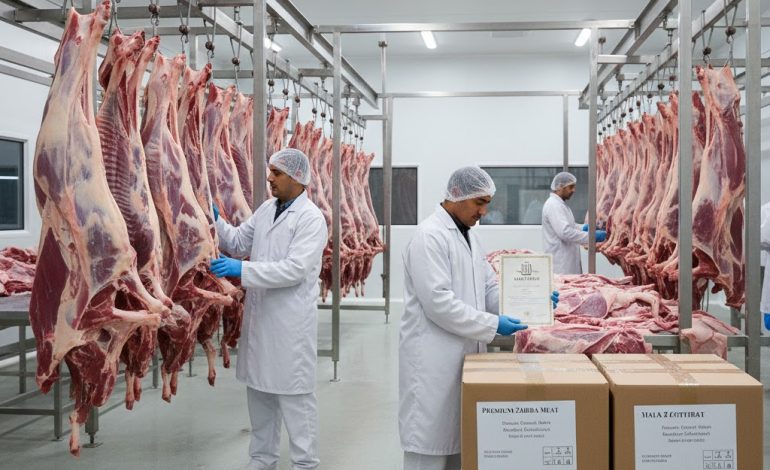

Import & Export Guidelines for Halal Meat

Importing and exporting Zabiha meat involves more than logistics. It requires strict adherence to halal standards, food safety laws, and international trade regulations. Understanding these guidelines is essential for suppliers, businesses, and consumers.
Halal Certification Requirements
Every shipment of Zabiha meat must be certified by an approved halal authority. Certification verifies slaughter methods, supervision, and processing conditions. Importing countries often maintain a list of recognized certification bodies.
Health and Safety Regulations
Meat must meet veterinary and hygiene standards set by importing countries. This includes disease-free certification, temperature-controlled transport, and sanitary packaging. Failure to comply can result in shipment rejection.
Cold Chain Management
Maintaining the cold chain during transport is critical. Refrigerated containers, monitoring systems, and temperature logs help preserve freshness and prevent spoilage during long-distance shipping.
Documentation and Customs Clearance
Exporters must provide health certificates, halal certificates, origin documents, and shipping manifests. Accurate paperwork speeds up customs clearance and prevents delays.
Conclusion
Import and export guidelines protect halal integrity and consumer safety. Proper certification, logistics, and compliance ensure Zabiha meat reaches global markets without compromising quality or religious standards.